Choosing the right apparel 3PL is about more than finding a warehouse that can pick, pack, and ship orders. Apparel brands have unique fulfillment requirements, from managing size and color variations to handling seasonal demand, returns, special packaging, and the customer experience that comes with every order.
The right apparel fulfillment partner should provide the infrastructure to scale while also understanding how your brand operates.
That means looking beyond storage and shipping rates. You need a 3PL that can manage inventory accurately, adapt to changing demand, support your sales channels, and provide the level of service your brand needs to grow.
For apparel brands, fulfillment is part of the brand experience.
What Is an Apparel 3PL?
An apparel 3PL is a third-party logistics provider that manages fulfillment and logistics for clothing, fashion, footwear, and accessory brands.
Services can include:
- Warehousing and inventory storage
- Receiving and inventory management
- Pick and pack
- Order fulfillment
- Shipping
- Returns processing
- Kitting and assembly
- Custom packaging
- B2C and B2B fulfillment
- Marketplace fulfillment
- Ecommerce integrations
- FBA preparation
Apparel adds another layer of complexity because products often come in multiple sizes, colors, styles, and variations. Seasonal launches and promotions can also create significant changes in order volume.
A capable apparel 3PL should be prepared to manage those changes without making fulfillment another problem for your team.
Why Apparel Fulfillment Requires a Different Approach
A clothing brand might have hundreds or thousands of individual SKUs created from relatively small differences between products.
One shirt can have multiple colors and sizes. Add different styles, collections, seasonal products, accessories, and packaging requirements, and inventory management becomes considerably more complex.
Fulfillment also doesn’t end when an order leaves the warehouse.
Returns are a major part of apparel ecommerce. Products may need to be inspected, processed, repackaged, and returned to available inventory.
That makes accuracy and organization particularly important.
Your 3PL needs to understand that the goal isn’t simply to move products through a warehouse. It is to help protect inventory, customer experience, and your brand throughout the fulfillment process.
What Should Apparel Brands Look for in a 3PL?
There are several factors apparel brands should consider when evaluating fulfillment partners.
1. Experience With Apparel and Accessories
Start with the basics.
Ask whether the 3PL has experience handling apparel and accessories and understands the operational requirements that come with those products.
Apparel fulfillment can involve:
- Multiple sizes and colors
- High SKU counts
- Seasonal collections
- Product launches
- Returns
- Special packaging
- Folding and presentation
- Accessories and bundled products
- B2C and B2B orders
FulfillMe provides apparel and accessories fulfillment for clothing, footwear, jewelry, sunglasses, and other fashion-related products.
The goal is to build fulfillment processes around the products being handled rather than forcing every brand into the same workflow.
2. Accurate Inventory Management
Inventory accuracy is critical for apparel brands.
If your system says a size medium is available but the warehouse can’t find it, the problem quickly becomes a customer service issue.
Accurate inventory management helps brands understand what is available, what has been allocated to orders, and what needs to be replenished.
Look for a 3PL that provides:
- Inventory visibility
- Ecommerce platform integrations
- SKU-level tracking
- Organized warehouse storage
- Clear receiving processes
- Inventory reporting
The more complex your catalog becomes, the more important accurate inventory management becomes.
3. Flexible Storage and Product Handling
Apparel isn’t one-size-fits-all.
A brand selling folded T-shirts has different requirements from a company shipping outerwear, shoes, handbags, or delicate accessories.
Your 3PL should have storage and handling processes that can accommodate your products.
That may include:
- Organized storage
- Garment-safe handling
- Folding
- Polybagging
- Hanging storage where appropriate
- Kitting
- Bundling
- Custom packaging
FulfillMe can customize fulfillment solutions around individual SKUs and product presentation requirements.
That flexibility can be particularly useful for apparel brands with different product types or packaging needs.
4. Returns Management
Returns are an important part of apparel fulfillment.
A return needs to move through the operation efficiently so the product can be evaluated and, when appropriate, returned to available inventory.
When evaluating an apparel 3PL, ask:
- How are returns received?
- How quickly are they processed?
- How is inventory status updated?
- Can products be repackaged?
- How are damaged or unsellable items handled?
- How much visibility will your team have?
A strong returns process can help reduce unnecessary inventory loss while creating a smoother experience for customers.
For apparel brands, returns shouldn’t be treated as an afterthought. They should be part of the fulfillment strategy from the beginning.
5. Packaging and Presentation
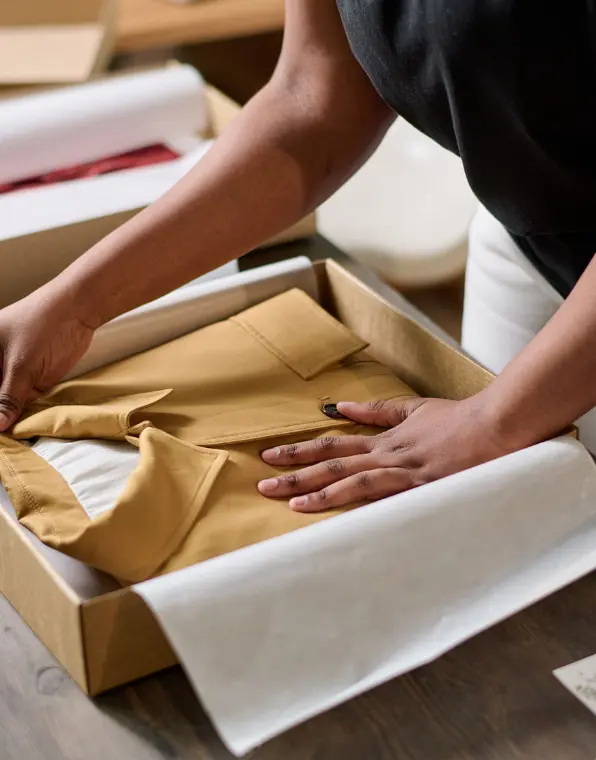
For many apparel brands, the package is part of the product experience.
The way an order arrives can reinforce the brand, particularly for premium, fashion, lifestyle, and direct-to-consumer businesses.
Your 3PL should be able to support the presentation requirements that matter to your brand.
Depending on your products, that could include:
- Branded packaging
- Tissue paper
- Hang tags
- Custom inserts
- Branded mailers
- Product bundling
- Special packing instructions
FulfillMe supports custom packaging options for apparel brands, including branded tissue paper, hang tags, and mailers.
The objective is to make sure the fulfillment process supports the brand experience rather than treating packaging as an afterthought.
6. Multiple Fulfillment Locations
Where inventory is stored can influence shipping costs and delivery times.
For brands serving customers throughout the U.S., having access to multiple fulfillment locations can provide greater flexibility when deciding where inventory should be positioned.
FulfillMe operates fulfillment centers in South Florida, Tennessee, and the Midwest.
Multiple locations can also provide flexibility as your business grows.
Your fulfillment strategy today may look very different after entering a new market, adding a new sales channel, or significantly increasing order volume.
7. Ecommerce Integrations
Your fulfillment operation should connect with the systems you already use.
For apparel brands, that might include Shopify, WooCommerce, BigCommerce, marketplaces, inventory systems, and other ecommerce tools.
Good integrations reduce manual work and help keep orders and inventory synchronized.
FulfillMe supports integrations with major ecommerce platforms, helping connect storefronts and sales channels with fulfillment operations.
The goal is a fulfillment process that works with your existing technology rather than creating additional manual work.
8. Scalability for Seasonal Demand
Apparel brands often experience significant changes in demand.
New collections, holiday shopping, promotions, influencer campaigns, seasonal changes, and product launches can all affect order volume.
Your 3PL needs to be able to adjust with you.
Ask potential providers how they handle:
- Seasonal peaks
- Product launches
- Flash sales
- New collections
- Growing SKU counts
- Higher order volumes
- New sales channels
The right partner should be prepared for growth rather than requiring you to rebuild your fulfillment operation every time the business changes.
9. B2C and B2B Fulfillment
Many apparel brands eventually sell through more than one channel.
A brand might sell directly through its website while also supplying retailers, marketplaces, or other business customers.
That means your 3PL may need to support both B2C and B2B fulfillment.
Consider whether the provider can manage:
- Individual ecommerce orders
- Bulk wholesale orders
- Retail fulfillment
- Marketplace orders
- Kitting and assembly
- Custom labeling
- Different shipping requirements
Having one fulfillment partner capable of supporting multiple channels can simplify operations as your brand expands.
10. Dedicated Account Management
Technology is important, but apparel brands also need people.
When an inventory issue comes up, a new product needs to be added, a launch is approaching, or a fulfillment process needs to change, you need someone who knows your business.
That’s where dedicated account management becomes important.
Ask:
- Will I have a dedicated account manager?
- Will they understand my products and processes?
- Who handles operational questions?
- How are issues escalated?
- Can the fulfillment process be customized as my business changes?
FulfillMe provides personalized support through dedicated account management.
For a growing apparel brand, that relationship can be just as important as the warehouse itself.
11. Flexible Fulfillment Solutions
Every apparel brand operates differently.
Some have a small number of high-volume SKUs. Others manage large catalogs with many sizes, colors, collections, and accessories.
Some need branded packaging. Others need kitting, FBA preparation, B2B fulfillment, or specialized workflows.
Your 3PL should be able to adapt to those requirements.
FulfillMe emphasizes flexible fulfillment solutions that can evolve with a client’s business, including customized workflows and fulfillment strategies.
That flexibility matters because your fulfillment operation should support the business you are building, not limit it.
Why Personalized Support Matters for Apparel Brands
A fulfillment relationship can become increasingly valuable when your 3PL understands your business.
Your team shouldn’t have to explain the same products, processes, priorities, and challenges every time an issue comes up.
A dedicated account team can build that knowledge over time.
They can understand your order patterns, recognize seasonal changes, help coordinate new products, and work with your team when something needs to change.
That’s an important part of FulfillMe’s approach.
The company focuses on personalized support and flexible solutions designed around individual business needs.
For apparel brands, that means fulfillment can become more than a warehouse function. It can become part of the broader operational team.
Apparel 3PL Checklist
When evaluating an apparel 3PL, consider the following:Why Apparel Brands Choose FulfillMe:
| What to Evaluate | Questions to Ask |
|---|---|
| Apparel Experience | Does the 3PL understand apparel, footwear, and accessories? |
| Inventory | How accurate and accessible is inventory information? |
| SKU Management | Can it handle sizes, colors, styles, and growing SKU counts? |
| Returns | How are returned products inspected, processed, and restocked? |
| Packaging | Can the 3PL support your brand’s packaging requirements? |
| Locations | Where are fulfillment centers located relative to your customers? |
| Technology | Does the 3PL integrate with your ecommerce platforms? |
| Scalability | Can it handle launches, promotions, and seasonal demand? |
| B2B Fulfillment | Can it support wholesale and retail orders? |
| Account Management | Will you have a dedicated point of contact? |
| Flexibility | Can workflows be customized as your business changes? |
| Strategic Support | Will the team help you solve operational challenges as you grow? |
FulfillMe combines technology-enabled fulfillment with the personal support that growing apparel brands need.
With nearly two decades of experience and three strategically located fulfillment centers across South Florida, Tennessee, and the Midwest, FulfillMe provides the infrastructure brands need to support nationwide fulfillment.
Its apparel capabilities include support for complex SKUs and size variations, specialized product handling, custom packaging, returns, B2C and B2B fulfillment, ecommerce integrations, and flexible fulfillment solutions.
But the relationship is just as important as the infrastructure.
FulfillMe provides dedicated account management and personalized support, giving brands a consistent team that understands their business and can help address operational challenges as they arise.
That’s particularly valuable for growing apparel companies that don’t want fulfillment to become another area they have to manage internally.
What Should an Apparel 3PL Partnership Look Like?
The right apparel 3PL should make your operation easier to manage, not more complicated.
Your fulfillment partner should understand your products, know your priorities, communicate clearly, and have the infrastructure to support your growth.
It should also be flexible enough to adapt when your business changes.
Maybe you’re launching a new collection. Maybe you’re adding wholesale. Maybe you’re expanding into a new marketplace. Maybe your order volume has doubled.
Your fulfillment partner should be ready to work through those changes with you.
That’s the difference between simply outsourcing fulfillment and building a real operational partnership.
Frequently Asked Questions About Apparel 3PLs
What is an apparel 3PL?
An apparel 3PL is a third-party logistics provider that manages fulfillment services for clothing, fashion, footwear, and accessory brands. Services can include warehousing, inventory management, picking and packing, shipping, returns, kitting, packaging, and B2B fulfillment.
What should I look for in an apparel 3PL?
Look for apparel experience, accurate inventory management, flexible storage and handling, returns processing, ecommerce integrations, multiple fulfillment locations, scalability, custom packaging capabilities, dedicated account management, and strategic support.
Why is apparel fulfillment different from other ecommerce fulfillment?
Apparel often involves many variations of sizes, colors, styles, and seasonal products. Brands may also have higher return volumes and specific packaging and presentation requirements.
Can an apparel 3PL handle returns?
Yes. Many 3PLs provide returns processing, but brands should ask how returns are inspected, processed, restocked, and reflected in inventory.
Can FulfillMe handle apparel and accessories?
Yes. FulfillMe provides apparel and accessories fulfillment for products including clothing, footwear, jewelry, sunglasses, and other fashion-related products.
Does FulfillMe support multiple fulfillment locations?
Yes. FulfillMe operates fulfillment centers in South Florida, Tennessee, and the Midwest.
Does FulfillMe offer custom packaging for apparel?
Yes. FulfillMe supports custom packaging options for apparel brands, including branded tissue paper, hang tags, and mailers.
Does FulfillMe provide dedicated account management?
Yes. FulfillMe provides personalized support through dedicated account management, with solutions designed around individual business needs.
Final Thoughts
The right apparel 3PL should offer more than warehouse space and shipping services.
You need a fulfillment partner that understands the complexity of apparel, from SKU management and inventory to returns, packaging, seasonal demand, and customer experience.
FulfillMe combines apparel-focused fulfillment capabilities with multiple U.S. fulfillment locations, ecommerce technology, flexible solutions, and dedicated account management.
Most importantly, the goal is to understand your business and work with you as it grows.
Because your fulfillment partner shouldn’t feel like another vendor.
It should feel like part of your team.