Artificial intelligence seems to be everywhere.
From customer service chatbots to content creation tools, businesses across nearly every industry are exploring how AI can improve efficiency and drive growth. The logistics and fulfillment industry is no exception.
But when eCommerce brands hear terms like artificial intelligence, machine learning, warehouse automation, and predictive analytics, it can be difficult to separate real-world benefits from marketing buzzwords.
The reality is that AI is already influencing how products move through the supply chain. Fulfillment providers are using technology to improve inventory visibility, reduce fulfillment errors, optimize warehouse operations, and make better decisions based on data.
For eCommerce brands, this matters because fulfillment plays a direct role in customer satisfaction, profitability, and growth. Faster shipping, better inventory management, and more accurate order fulfillment can all contribute to a better customer experience.
In this guide, we’ll explore what AI in fulfillment actually means, how it’s being used today, and what growing eCommerce brands should look for when evaluating fulfillment partners.
What Is AI in Fulfillment?
AI in fulfillment refers to the use of artificial intelligence, machine learning, predictive analytics, and automation technologies to improve warehouse and logistics operations.
Rather than relying entirely on manual processes or historical reporting, AI-powered systems can analyze large amounts of data, identify patterns, and help fulfillment teams make more informed decisions.
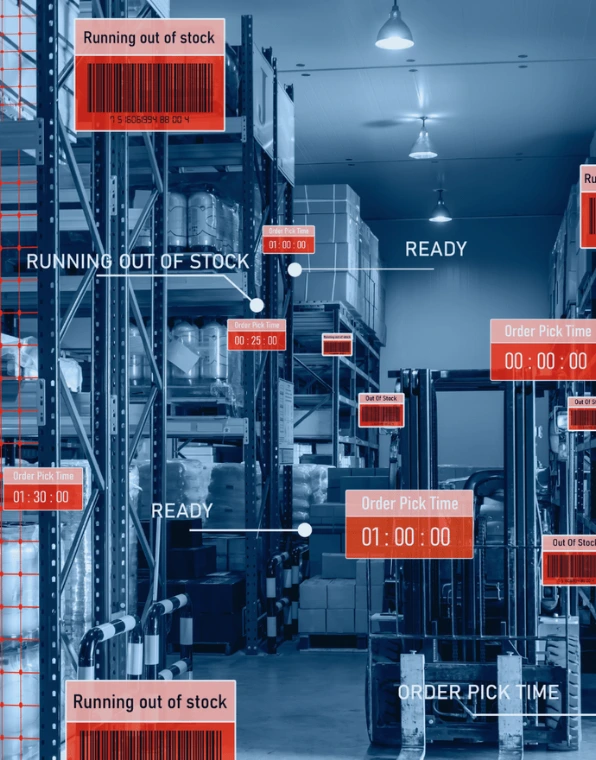
For example, an AI-powered system may recognize that a particular product experiences increased demand during specific months of the year. It can use that information to help forecast inventory requirements and reduce the likelihood of stockouts.
Similarly, warehouse systems can analyze order trends and recommend more efficient product placement, helping reduce the time required to pick and pack orders.
For most eCommerce businesses, the value of AI isn’t about replacing people. It’s about helping fulfillment operations become smarter, faster, and more efficient.
Why AI Is Becoming More Important in Fulfillment
Customer expectations have changed dramatically over the past decade.
Consumers now expect fast shipping, accurate inventory information, real-time tracking updates, and a seamless purchasing experience. At the same time, eCommerce businesses face increasing pressure to control costs while maintaining high service levels.
These competing demands create challenges for both brands and fulfillment providers.
Artificial intelligence helps address many of these challenges by providing greater visibility into operations and supporting more proactive decision-making.
Instead of reacting to problems after they occur, fulfillment teams can identify potential issues earlier and take corrective action before they affect customers.
As order volumes increase and supply chains become more complex, data-driven decision-making is becoming increasingly important for maintaining operational efficiency.
Smarter Inventory Management
Inventory management remains one of the biggest challenges facing growing eCommerce brands.
Too much inventory ties up capital and increases storage costs. Too little inventory can lead to stockouts, delayed shipments, and lost sales.
Traditional forecasting methods often rely heavily on historical sales data. While historical performance remains valuable, it doesn’t always provide a complete picture of future demand.
Modern AI-powered forecasting tools can analyze additional factors such as seasonality, purchasing trends, marketing campaigns, sales velocity, and external market conditions.
This broader analysis helps businesses make more informed inventory decisions.
For brands, improved forecasting can mean fewer stockouts, healthier inventory levels, and better cash flow management.
Reducing Fulfillment Errors
Every fulfillment mistake has a cost.
Shipping the wrong product, sending an incomplete order, or making inventory allocation errors can lead to customer complaints, returns, replacement shipments, and negative reviews.
As businesses scale, maintaining high levels of order accuracy becomes increasingly important.
Many modern warehouse systems use automation and intelligent verification processes to help reduce human error throughout the fulfillment process.
Technology can help validate product selection, verify quantities, and identify inconsistencies before orders leave the warehouse.
While no fulfillment operation can eliminate errors entirely, AI-supported workflows can help improve consistency and accuracy across large volumes of orders.
For eCommerce brands, even small improvements in accuracy can have a significant impact on customer satisfaction and retention.
Faster Fulfillment Through Better Warehouse Operations
When customers place an order, speed matters.
Many shoppers now expect delivery within a matter of days, and in some cases, even faster.
Meeting those expectations requires more than simply having products in stock. Warehouse operations must also be optimized for efficiency.
AI can help fulfillment providers improve warehouse performance by analyzing order patterns and inventory movement.
Frequently ordered products can be positioned in locations that reduce travel time for warehouse teams. Picking routes can be optimized to improve productivity. Labor resources can be allocated more effectively during periods of increased demand.
These operational improvements may seem small individually, but collectively they can significantly improve fulfillment speed and efficiency.
For growing brands, faster processing times often translate into better customer experiences.
Better Demand Forecasting for Growing Brands
One of the most valuable applications of AI in fulfillment is demand forecasting.
Growth is exciting, but it can also create operational challenges.
Unexpected sales spikes, seasonal demand shifts, influencer campaigns, and product launches can quickly strain inventory and fulfillment operations.
AI-powered forecasting tools help fulfillment teams identify patterns and anticipate changes before they occur.
While no forecasting system can predict the future perfectly, better visibility into potential demand trends helps businesses prepare more effectively.
This can lead to improved purchasing decisions, fewer inventory shortages, and smoother fulfillment operations during peak periods.
For brands experiencing rapid growth, forecasting often becomes a critical component of long-term success.
AI Improves Visibility Across the Supply Chain
Many fulfillment challenges stem from a lack of visibility.
Businesses may not know exactly how much inventory is available, where products are located, or how quickly inventory is moving through the warehouse.
Modern fulfillment technology helps address these challenges by providing more accurate, real-time operational data.
This increased visibility allows businesses to make better decisions regarding purchasing, inventory replenishment, marketing campaigns, and product launches.
When inventory data is accurate and accessible, businesses can operate with greater confidence and agility.
What AI Doesn’t Replace
Despite the growing role of automation and artificial intelligence, successful fulfillment operations still depend heavily on people.
Warehouse teams, operations managers, inventory specialists, customer service professionals, and logistics experts continue to play essential roles in fulfillment.
Technology can help improve efficiency and support decision-making, but human expertise remains critical for problem-solving, quality control, process improvement, and customer support.
The most successful fulfillment operations combine experienced people with modern technology.
Rather than replacing human expertise, AI helps teams work more effectively and focus on higher-value activities.
What eCommerce Brands Should Look for in a Modern Fulfillment Partner
Not every fulfillment provider uses technology in the same way.
When evaluating a fulfillment partner, eCommerce brands should look beyond warehouse space and shipping rates.
Key considerations include:
Inventory Visibility
Can you access real-time inventory information and reporting?
Technology Integrations
Does the provider integrate with your eCommerce platform, marketplace channels, and business systems?
Order Accuracy
What processes are in place to maintain fulfillment quality and reduce errors?
Scalability
Can the provider support your business as order volume grows?
Operational Expertise
Does the provider have experience supporting brands similar to yours?
Technology is important, but it should support a broader fulfillment strategy focused on reliability, accuracy, and growth.
The Future of AI in Fulfillment
Artificial intelligence will continue to influence the future of logistics and fulfillment.
Over the next several years, we can expect further advances in forecasting, warehouse optimization, inventory management, automation, and data analytics.
However, the goal isn’t simply adopting technology for the sake of technology.
The real objective is creating fulfillment operations that are more responsive, more efficient, and better equipped to support growing brands.
As customer expectations continue to evolve, fulfillment providers that combine strong operational processes with modern technology will be better positioned to help businesses succeed.
How FulfillMe Helps Growing eCommerce Brands
At FulfillMe, we understand that fulfillment is about more than moving products from one location to another.
Reliable fulfillment requires accurate inventory management, efficient warehouse operations, strong technology, and a commitment to delivering a positive customer experience.
We leverage modern fulfillment technology and data-driven processes to help brands improve visibility, maintain order accuracy, and scale efficiently as they grow.
Whether you’re shipping a few hundred orders per month or managing significant growth, our team provides the fulfillment infrastructure and operational support needed to help your business succeed.
Frequently Asked Questions About AI in Fulfillment
What is AI in fulfillment?
AI in fulfillment refers to the use of artificial intelligence, machine learning, predictive analytics, and automation technologies to improve warehouse operations, inventory management, and order fulfillment processes.
How does AI improve inventory management?
AI can analyze historical sales patterns, inventory movement, seasonality, and demand trends to help businesses forecast inventory needs more accurately and reduce stockouts.
Can AI improve order accuracy?
Yes. Modern fulfillment technologies can help identify potential errors, verify product selection, and support quality control processes that improve overall order accuracy.
Does AI replace warehouse workers?
No. AI is generally used to support warehouse teams by improving efficiency and decision-making. Human expertise remains essential for quality control, problem-solving, customer support, and operational management.
What are the benefits of AI for eCommerce brands?
Benefits may include improved inventory visibility, better forecasting, higher order accuracy, faster fulfillment, reduced operational inefficiencies, and a better customer experience.
How are 3PLs using AI?
Many 3PL providers use AI-powered technologies to support inventory forecasting, warehouse optimization, labor planning, operational reporting, and fulfillment workflows.
Should eCommerce brands care about AI in fulfillment?
Yes. While brands don’t necessarily need to implement AI themselves, working with fulfillment providers that leverage modern technology can help improve efficiency, accuracy, and scalability as the business grows.

Don Cummings is a seasoned logistics and fulfillment executive, serving as Vice President of Sales and Marketing at FulfillMe. He brings a proven track record of building high-performing national sales teams and implementing sales enablement strategies that align commercial objectives across sales and marketing functions. With early career experience at the United States Postal Service and Stamps.com, Don combines deep operational insight with strategic leadership to drive scalable growth solutions in the 3PL and e-commerce sectors.