As customer expectations continue to rise, many ecommerce brands are exploring faster fulfillment models such as dark stores and third-party logistics (3PL). While dark stores can support rapid local delivery, they also introduce operational complexity and significant overhead. For many growing businesses, partnering with an experienced 3PL like FulfillMe delivers the speed customers expect without the cost and challenges of managing additional facilities. This guide explains what dark stores are, how they compare to traditional fulfillment, and when each model makes the most sense.
What Is a Dark Store?
A dark store is a retail location that is not open to the public and is used exclusively for fulfilling online orders.
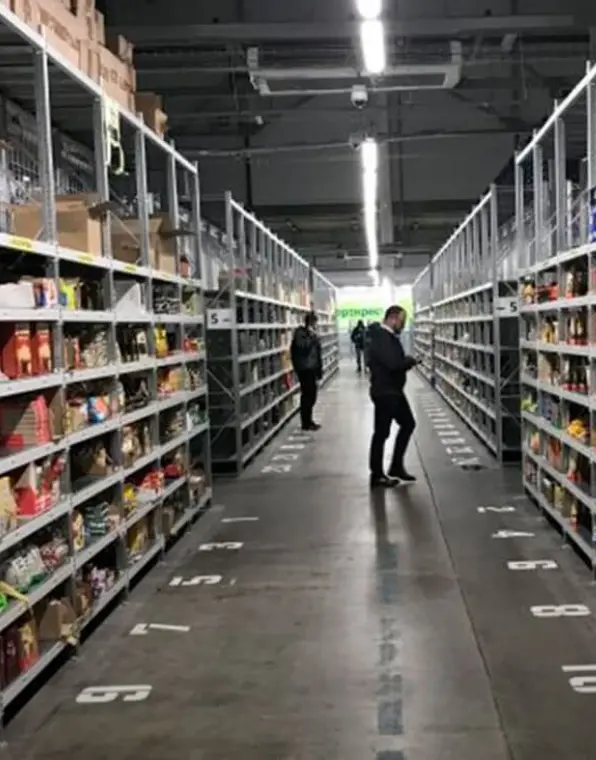
Unlike traditional brick-and-mortar stores, customers cannot browse or shop inside a dark store. Instead, it operates as a local fulfillment hub designed to enable fast delivery, often within hours.
Dark stores typically hold localized inventory and are strategically placed in dense urban areas to reduce delivery times. While originally popularized by grocery retailers, the model has expanded into categories such as:
The core idea behind dark stores is simple: move inventory closer to the customer so orders can be delivered faster, often same-day or even within a few hours.
However, while the promise of speed is appealing, the operational model behind dark stores is significantly more complex than traditional ecommerce fulfillment.
How Dark Stores Work
Dark stores operate as micro-fulfillment centers designed specifically for online order processing. The workflow is straightforward but highly time-sensitive:
Customer places an order online
The order is submitted through an ecommerce website or app.Order is routed to the nearest dark store
A system identifies the closest location with available inventory.An employee picks the products
Staff members quickly locate items using optimized picking routes.Order is packed for delivery
Items are packed for short-distance transport, often with minimal packaging.Courier completes last-mile delivery
A delivery partner picks up the order and delivers it directly to the customer, sometimes within 1–3 hours.
The key advantage of this model is speed. Because inventory is located closer to customers, delivery times can be significantly reduced compared to traditional warehouses that may ship from regional or national distribution centers.
However, achieving this speed consistently requires tight coordination between inventory systems, staffing, forecasting, and logistics technology.
Benefits of Dark Stores
Dark stores offer several compelling advantages for retailers that prioritize ultra-fast delivery.
Faster delivery times
The most obvious benefit is speed. Dark stores enable same-day or even sub-hour delivery in densely populated areas.
Improved local inventory availability
Products are stored closer to demand centers, which can reduce stockouts in high-demand regions.
Reduced shipping distance
Shorter delivery routes mean lower last-mile transit times and potentially reduced transportation emissions.
Lower customer-facing retail costs
Because these locations are not open to the public, retailers can reduce costs associated with in-store staffing, merchandising, and customer service.
Enhanced customer experience
Fast delivery windows can significantly improve customer satisfaction and conversion rates, especially for convenience-driven purchases.
Better control over fulfillment experience
Brands operating their own dark stores can tightly control picking, packing, and delivery standards.
Despite these benefits, dark stores are not a universal solution. Their advantages come with substantial operational tradeoffs.
Challenges of Operating Dark Stores
While dark stores can improve delivery speed, they also introduce several operational and financial challenges that can be difficult for growing ecommerce brands to manage.
Higher operating costs
Running multiple micro-fulfillment locations requires significant investment in rent, staffing, and technology infrastructure.
Inventory duplication across locations
Brands must distribute inventory across several sites, increasing complexity and the risk of overstocking or stock imbalances.
Labor management complexity
Each location requires trained staff for picking, packing, and inventory management, which adds ongoing HR and scheduling challenges.
Technology and systems requirements
Dark stores rely heavily on real-time inventory systems, routing software, and demand forecasting tools to function efficiently.
Real estate constraints
Urban locations suitable for dark stores are often expensive and competitive, increasing fixed costs.
Demand forecasting accuracy
Poor forecasting can lead to overstock in some locations and stockouts in others, directly impacting customer experience.
Returns management complexity
Handling returns across multiple distributed locations creates additional operational overhead.
Scaling challenges during peak periods
During high-demand seasons, staffing and inventory balancing across multiple dark stores becomes increasingly difficult.
For many growing brands, these challenges quickly outweigh the benefits of operating their own network of dark stores.
Dark Store vs Traditional Warehouse
Understanding the difference between dark stores and traditional fulfillment centers helps clarify when each model is appropriate.
| Dark Store | Traditional Warehouse |
|---|---|
| Local inventory per city | Regional or national inventory |
| Small fulfillment footprint | Large centralized facility |
| Optimized for same-day delivery | Optimized for standard shipping |
| High operating costs per unit | Lower cost per order |
| Focused on urban density | Broad geographic coverage |
| Multiple distributed locations | Fewer centralized hubs |
Traditional warehouses prioritize efficiency and scale, while dark stores prioritize speed and proximity. Most ecommerce brands operate better within the traditional warehouse model unless they require hyper-local delivery capabilities.
Dark Stores vs 3PL Fulfillment
The most important comparison for growing ecommerce brands is not just dark stores versus warehouses, but dark stores versus third-party logistics (3PL) fulfillment.
Instead of investing in:
Multiple real estate leases
Hiring and managing fulfillment staff
Building proprietary inventory systems
Managing carrier relationships
Brands can leverage a 3PL partner that already has:
Established fulfillment centers
Advanced warehouse management systems
Negotiated carrier shipping discounts
Nationwide distribution networks
Experienced logistics teams
This is where solutions like FulfillMe become especially valuable.
Rather than building and managing a network of dark stores, many ecommerce brands partner with FulfillMe. By leveraging strategically located fulfillment centers, advanced warehouse technology, and optimized carrier routing, brands can reduce shipping times while avoiding the capital investment required to operate their own fulfillment facilities.
3PL providers also offer scalability that dark stores typically cannot match. Instead of opening new locations every time demand increases, brands can simply expand volume within an existing fulfillment network.
This shift allows businesses to focus more on product development, marketing, and customer acquisition rather than logistics infrastructure.
When Does a Dark Store Make Sense?
Dark stores are best suited for specific types of businesses and market conditions.
They make sense when:
A brand operates in dense urban markets
Customers demand ultra-fast (same-day or sub-2-hour) delivery
Order volumes are extremely high in localized areas
The business is part of grocery, convenience, or on-demand retail
The company has sufficient capital to support multiple facilities
Large national grocery chains and quick-commerce platforms are the most common users of dark store models because their products and customer expectations align with rapid delivery.
However, even in these cases, profitability depends heavily on order density and operational efficiency.
When a 3PL Is the Better Choice
For most growing ecommerce brands, a 3PL fulfillment model is significantly more practical and scalable.
A 3PL is typically the better choice when a business needs:
Sustainable growth without infrastructure investment
Integration with platforms like Shopify, Amazon, TikTok Shop, Walmart, BigCommerce, or WooCommerce
Efficient returns processing and reverse logistics
Kitting and subscription box fulfillment
B2B and wholesale order management
International shipping capabilities
Seasonal scalability without hiring or leasing constraints
Instead of managing multiple fulfillment nodes, brands can centralize operations through a distributed 3PL network that balances speed, cost, and coverage.
This approach reduces complexity while still enabling fast shipping times and strong customer experience.
How FulfillMe Helps Growing Brands Scale
FulfillMe helps ecommerce brands scale without the operational burden of building fulfillment infrastructure.
Rather than investing in warehouses or dark store networks, FulfillMe provides:
Nationwide fulfillment coverage
Same-day and fast shipping options
Real-time inventory visibility
Seamless ecommerce platform integrations
FBA prep services for Amazon sellers
Returns processing and reverse logistics
Kitting and assembly services
Subscription box fulfillment
Branded packaging options
Flexible storage and scalable capacity
Dedicated account management support
This model allows brands to maintain a strong delivery experience while keeping operations lean and flexible. Instead of focusing on logistics complexity, teams can focus on growth, marketing, and customer retention.
Frequently Asked Questions
What is a dark store?
A dark store is a retail facility that is not open to the public and is used exclusively for fulfilling online orders. It functions as a local micro-fulfillment center designed for fast delivery, often within the same day.
Are dark stores the same as warehouses?
No. Warehouses are typically large, centralized facilities focused on regional or national shipping. Dark stores are smaller, localized hubs optimized for rapid delivery in dense urban areas.
What industries use dark stores?
Dark stores are commonly used in grocery, convenience retail, health and beauty, fashion, and consumer electronics—especially in markets where fast delivery is a competitive advantage.
Can a 3PL replace a dark store?
Yes, in many cases. A 3PL can replicate fast shipping performance using strategically located fulfillment centers without requiring brands to operate their own physical locations.
Are dark stores expensive?
Yes. Dark stores require multiple leases, staff per location, inventory duplication, and advanced technology systems, making them significantly more expensive to operate than centralized fulfillment models.
Is a 3PL more cost-effective?
For most growing ecommerce brands, yes. A 3PL spreads infrastructure and staffing costs across multiple clients, reducing per-order fulfillment expenses while improving scalability.
How does FulfillMe support fast ecommerce fulfillment?
FulfillMe supports fast fulfillment through strategically located warehouses, optimized carrier routing, ecommerce integrations, and streamlined operational workflows that enable fast and reliable delivery.
Conclusion
Dark stores can be an effective solution for retailers requiring hyper-local delivery in densely populated markets. However, for most growing ecommerce brands, they introduce significant operational complexity, higher costs, and scaling challenges.
Partnering with an experienced 3PL offers a more flexible and scalable alternative. By leveraging the infrastructure and logistics expertise of providers like FulfillMe, businesses can achieve fast, reliable fulfillment without the burden of managing physical distribution networks.
In most cases, the winning strategy is not building more fulfillment locations—it’s building smarter partnerships that scale with your business.

Don Cummings is a seasoned logistics and fulfillment executive, serving as Vice President of Sales and Marketing at FulfillMe. He brings a proven track record of building high-performing national sales teams and implementing sales enablement strategies that align commercial objectives across sales and marketing functions. With early career experience at the United States Postal Service and Stamps.com, Don combines deep operational insight with strategic leadership to drive scalable growth solutions in the 3PL and e-commerce sectors.