Launching a Shopify store has never been easier. Growing one profitably is a different challenge.
Many merchants start by storing inventory in a spare bedroom, garage, office, or small warehouse. At first, packing orders yourself seems manageable. You know exactly where every product is located, customer orders are relatively predictable, and fulfillment costs appear low.
Then growth happens.
Order volume increases, inventory expands, shipping becomes more complicated, and fulfillment starts consuming more time than marketing, customer acquisition, and product development.
This is where many Shopify merchants reach a crossroads. Should you continue fulfilling orders internally, hire warehouse staff, lease more space, or partner with a third-party logistics provider (3PL)?
The answer depends on your growth goals, operational complexity, and customer expectations.
In this guide, we’ll explain how Shopify fulfillment works in 2026, when it makes sense to outsource fulfillment, and how to choose a fulfillment partner that can support long-term growth.
What Is Shopify Fulfillment?
Shopify fulfillment refers to everything that happens after a customer places an order.
The process includes receiving inventory, storing products, managing stock levels, picking items for orders, packing shipments, generating shipping labels, delivering packages, and processing returns.
While Shopify provides powerful tools for selling products online, merchants still need a strategy for physically getting products into customers’ hands.
Some businesses fulfill orders themselves. Others use fulfillment partners that integrate directly with Shopify and handle warehousing, packing, shipping, and returns on their behalf. Shopify’s fulfillment ecosystem allows merchants to connect with third-party logistics providers directly through their Shopify admin.
How Shopify Fulfillment Works in 2026
One of the biggest misconceptions among new merchants is that Shopify handles fulfillment automatically.
In reality, Shopify manages the order workflow, but merchants still need a fulfillment strategy.
Once a customer places an order, that order must be processed, inventory allocated, products picked from storage, packaged correctly, labeled for shipment, and handed off to a carrier.
For smaller businesses, this often happens manually.
For growing brands, fulfillment is frequently automated through warehouse management systems and 3PL integrations that sync directly with Shopify. Orders flow automatically into the warehouse, inventory updates in real time, and tracking information is sent back to customers after shipment. Modern fulfillment integrations significantly reduce manual work while improving inventory accuracy and shipping efficiency.
The Three Most Common Shopify Fulfillment Models
Self-Fulfillment
Most Shopify stores begin here.
The business owner receives inventory, stores products, packs orders, purchases shipping labels, and handles customer service.
Self-fulfillment offers maximum control and can be cost-effective at low volumes. It also allows merchants to personally oversee packaging quality and customer experience.
However, self-fulfillment becomes increasingly difficult as order volume grows. What works at 10 orders per day often becomes unsustainable at 100 orders per day.
Hybrid Fulfillment
Some businesses operate a hybrid model where they fulfill certain products internally while outsourcing others.
This approach can work well for businesses with specialized products, seasonal inventory, or multiple sales channels. However, hybrid operations often create additional complexity around inventory management and order routing.
Many merchants eventually discover that managing inventory across multiple locations becomes difficult without sophisticated systems and processes. Community discussions frequently highlight inventory synchronization and fulfillment visibility as common operational challenges.
Third-Party Logistics (3PL)
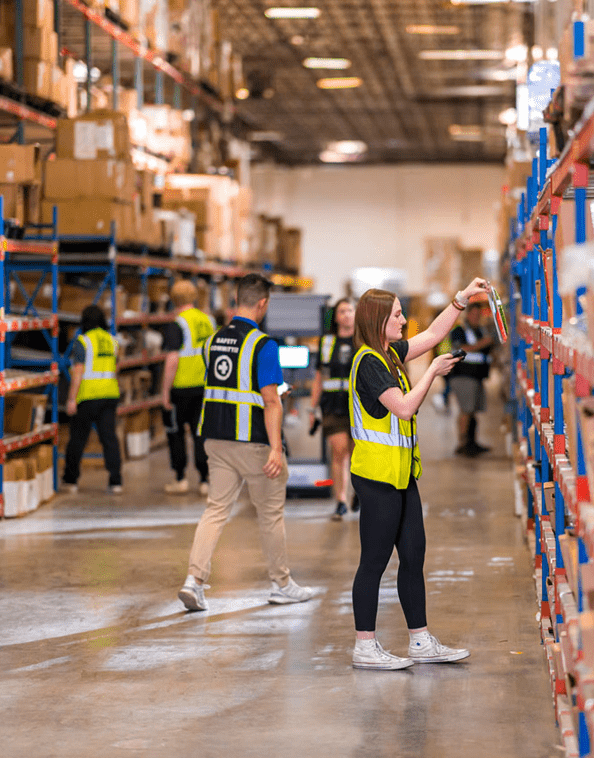
A 3PL stores inventory, processes orders, packs shipments, and handles fulfillment on behalf of merchants.
Rather than investing in warehouse space, labor, equipment, and operational systems, businesses can leverage an established fulfillment infrastructure.
For growing Shopify brands, a 3PL often provides access to warehouse technology, shipping discounts, fulfillment expertise, and scalable operations that would be expensive to build internally.
Many merchants turn to a 3PL once fulfillment starts limiting their ability to grow. Shopify specifically positions fulfillment partners as a way for merchants to scale without managing their own warehouse operations.
Signs You’ve Outgrown Self-Fulfillment
There is no universal order threshold that signals it’s time to outsource fulfillment.
Some businesses transition at 200 orders per month. Others wait until they reach several thousand.
The better question is whether fulfillment is becoming a bottleneck.
If you’re spending evenings packing orders, struggling to maintain inventory accuracy, running out of storage space, or delaying marketing initiatives because of operational demands, fulfillment may be slowing your growth.
Another warning sign is increasing fulfillment errors.
As order volume grows, mistakes become more costly. Incorrect shipments, delayed deliveries, inventory discrepancies, and customer service issues can impact retention and profitability.
Successful brands often view fulfillment as a growth function rather than simply a warehouse activity.
What to Look for in a Shopify 3PL
Choosing a fulfillment partner is one of the most important operational decisions an eCommerce business will make.
Shopify Integration
Your fulfillment provider should integrate directly with Shopify.
Orders, inventory updates, tracking information, and reporting should flow automatically between systems.
Manual spreadsheets and disconnected workflows create opportunities for mistakes and inefficiencies.
Strategic Warehouse Locations
Warehouse location directly affects shipping costs and delivery times.
Inventory stored closer to customers can reduce shipping zones and improve delivery speed.
As customer expectations continue to rise, fulfillment speed has become a competitive advantage for many online brands.
Inventory Visibility
Merchants should have access to real-time inventory information.
Inventory visibility improves forecasting, purchasing decisions, and customer communication.
Without accurate inventory data, businesses risk overselling products or missing revenue opportunities.
Scalability
Your fulfillment partner should be capable of supporting future growth, not just current demand.
Whether your next growth opportunity comes from paid advertising, influencer campaigns, retail expansion, or marketplace sales, your fulfillment operation should be able to keep pace.
Transparent Pricing
Fulfillment pricing can vary significantly.
Before signing with any provider, understand how receiving, storage, pick-and-pack services, shipping, kitting, and returns are billed.
The lowest advertised rate isn’t always the lowest overall cost.
Common Shopify Fulfillment Mistakes
One of the most common mistakes merchants make is waiting too long to improve fulfillment operations.
Many brands continue using processes that worked during the startup phase long after those processes stop supporting growth.
Another common issue is underestimating the impact of inventory management.
Inventory inaccuracies often create fulfillment delays, customer service issues, and lost revenue. Discussions among Shopify merchants frequently point to inventory synchronization and order routing as major operational challenges as businesses scale.
Some businesses also focus exclusively on shipping costs while overlooking order accuracy, customer experience, technology, and scalability.
The right fulfillment strategy should improve both operational efficiency and customer satisfaction.
How FulfillMe Helps Shopify Brands Scale
At FulfillMe, we work with growing eCommerce brands that need more than just warehouse space.
Our Shopify integration helps automate order flow, inventory management, fulfillment operations, and shipping processes so businesses can focus on growth rather than logistics.
We support brands across multiple industries, including subscription boxes, health and wellness, consumer products, apparel, beauty, and specialty retail.
From inventory receiving and storage to order fulfillment, kitting, custom packaging, and returns management, our team provides the operational infrastructure needed to support growth without the overhead of running your own warehouse.
Whether you’re shipping hundreds of orders per month or preparing for your next stage of growth, FulfillMe helps simplify fulfillment so you can focus on scaling your business.
Final Thoughts
The fulfillment strategy that helped launch your Shopify store may not be the strategy that helps you scale it.
As order volume increases, fulfillment becomes a critical component of customer experience, profitability, and long-term growth.
Understanding your options and recognizing when it’s time to outsource can help prevent operational challenges before they limit your business.
For many growing brands, partnering with a 3PL isn’t just about shipping products faster. It’s about creating a scalable foundation that supports sustainable growth.
Shopify Fulfillment FAQ
What is Shopify fulfillment?
Shopify fulfillment is the process of storing inventory, processing orders, packing products, shipping customer orders, and managing returns after purchases are made through a Shopify store.
Does Shopify provide fulfillment services?
Shopify does not operate its own warehouses. Instead, Shopify provides access to fulfillment partners and 3PL providers through its fulfillment ecosystem, allowing merchants to manage fulfillment from within Shopify.
What is a Shopify 3PL?
A Shopify 3PL is a third-party logistics provider that integrates with Shopify and manages inventory storage, order fulfillment, shipping, and returns for merchants.
When should I outsource Shopify fulfillment?
Many businesses consider outsourcing when fulfillment starts consuming significant time, inventory management becomes difficult, storage space becomes limited, or order volume increases beyond what internal operations can efficiently handle.
Can a 3PL integrate directly with Shopify?
Yes. Most modern fulfillment providers offer direct Shopify integrations that automate order processing, inventory synchronization, shipment tracking, and fulfillment reporting.
How much does Shopify fulfillment cost?
Costs vary based on storage requirements, order volume, shipping destinations, product dimensions, and service requirements. Most fulfillment providers charge for receiving inventory, storage, fulfillment, and shipping services.
Is FulfillMe a Shopify fulfillment partner?
FulfillMe helps Shopify merchants manage inventory, fulfillment, shipping, kitting, custom packaging, and returns so they can scale operations without managing their own warehouse.

Don Cummings is a seasoned logistics and fulfillment executive, serving as Vice President of Sales and Marketing at FulfillMe. He brings a proven track record of building high-performing national sales teams and implementing sales enablement strategies that align commercial objectives across sales and marketing functions. With early career experience at the United States Postal Service and Stamps.com, Don combines deep operational insight with strategic leadership to drive scalable growth solutions in the 3PL and e-commerce sectors.